How to Choose a Gold Card Visa Immigration Attorney: Complete Guide
Why Your Choice of Immigration Attorney Matters for the Gold Card
The US Gold Card Visa represents one of the most significant immigration pathways ever created for high-net-worth individuals, requiring a non-refundable gift payment of $1 million per person (individual Gold Card) plus a $15,000 processing fee, $2 million (Corporate), or $5 million (Platinum, pending Congressional approval) in exchange for US permanent residency under the EB-1A or EB-2 NIW visa categories (also used for O-1 visa holders) via Form I-140G. Each family member must pay their own $1 million gift payment plus $15,000 processing fee individually — there is no family inclusion under a single payment. At these thresholds, the margin for error in your application is effectively zero. A single procedural misstep, an overlooked regulatory requirement, or a poorly documented gift payment could jeopardize not just your residency goals but millions of dollars in capital.
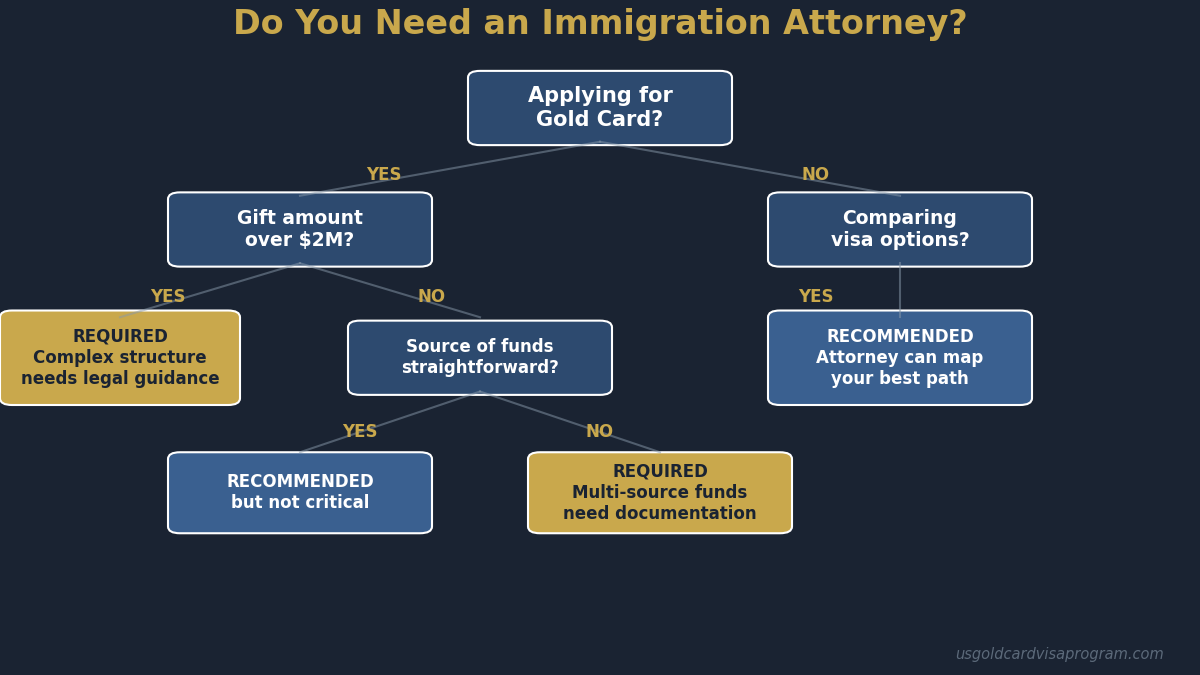
Unlike routine visa applications where the stakes may be lower and the processes well-established, the Gold Card demands an attorney who understands the intersection of immigration law, tax planning, asset protection, and international finance. This is not a matter of filling out forms correctly (see our application process guide), although that certainly matters. It is about strategic positioning, meticulous documentation, and navigating a program that is still being shaped by regulation and administrative guidance.
The attorney you select will serve as the architect of your entire application strategy. They will advise you on how to structure your gift payment, coordinate with your financial advisors and tax professionals, anticipate potential issues before they arise, and represent your interests if complications develop. In a program of this magnitude, your attorney is not merely a service provider but a critical strategic partner whose judgment and expertise directly influence whether your application succeeds or fails.
Choosing the wrong attorney can result in delayed processing, requests for additional evidence, or outright denial. Worse, with a non-refundable gift payment, the financial consequences of poor legal guidance can be catastrophic. This guide will walk you through exactly what to look for (also see our Gold Card Visa FAQ), what to avoid, and how to evaluate potential attorneys so you can make this decision with confidence.
What Makes Gold Card Visa Cases Different
The Gold Card Visa is not simply another investor visa with a higher price tag — it is a gift-to-government pathway under the EB-1A or EB-2 NIW categories. It occupies a unique position within US immigration law, and the attorneys who handle these cases must possess capabilities that go well beyond standard immigration practice. Understanding what sets these cases apart will help you appreciate why specialized counsel is essential.
Unprecedented Gift Payment Threshold
With the individual Gold Card requiring a $1 million gift payment plus $15,000 processing fee per person, and a future Platinum level at $5 million (pending Congressional approval), the Gold Card represents the highest financial commitment of any US immigration pathway. Each family member must independently pay $1 million plus $15,000 — a family of four would commit $4.06 million total. Unlike a traditional investment, this is a non-refundable gift to the Department of Commerce paid after the vetting process. Attorneys working on Gold Card cases must be comfortable operating at this financial level, must understand the I-140G form and its requirements (including 20-year employment history, all financial accounts, and cryptocurrency wallet blockchain tracing), and must understand the due diligence, compliance, and documentation standards that accompany transactions of this magnitude.
A New Program Without Established Case Law
Because the Gold Card Visa program launched in December 2025 at trumpcard.gov, there is still limited case law, administrative decisions, or agency precedent to guide applicants or their attorneys. This is fundamentally different from working within established programs like the H-1B or EB-5, where decades of adjudication history provide a roadmap. Attorneys handling Gold Card cases must be capable of interpreting new regulations in real time, anticipating how agencies will apply ambiguous provisions, and building applications that are robust enough to withstand scrutiny even in the absence of clear precedent.
Complex Interaction with Tax Planning
Becoming a US permanent resident triggers extensive tax obligations, including worldwide income reporting, FBAR requirements, FATCA compliance, and potential exit tax considerations if residency is later relinquished. For individuals making a $1 million gift payment (plus $15,000 processing fee) through the Gold Card program, the tax implications can be enormous. A Gold Card attorney must understand these tax dimensions deeply enough to coordinate effectively with your tax advisors, even though they should not be providing tax advice themselves. They need to recognize when proposed investment structures could create adverse tax consequences and flag those issues before they become problems.
Family Members and Individual Applications
Unlike the EB-5 program, the Gold Card does not include family members under a single application. Each family member who wants a Gold Card must submit their own I-140G application, pay their own $1 million gift payment, and pay the $15,000 processing fee individually. This means a family of four would need to commit $4.06 million total. Attorneys must be experienced in coordinating multiple simultaneous I-140G filings, ensuring consistent source-of-funds documentation across family members, and managing the timing and vetting process for each individual application.
Free Gold Card Visa Guide
Get our Gold Card guide with cost breakdowns, timelines, and attorney tips. Delivered instantly to your inbox.
No spam. Unsubscribe anytime.
Essential Qualifications to Look For
Not every immigration attorney is equipped to handle a Gold Card Visa case. The following qualifications should serve as your baseline when evaluating potential counsel. An attorney who lacks these credentials may still be competent in other areas of immigration law, but the Gold Card demands a specific combination of skills and experience.
AILA Membership and Active Participation
The American Immigration Lawyers Association is the premier professional organization for immigration attorneys in the United States. AILA membership alone is not sufficient, but it is a necessary starting point. Look for attorneys who are not just members but active participants, particularly those who serve on AILA committees related to investor visas, business immigration, or new program implementation. These attorneys are typically the first to receive updates on regulatory developments, and they often participate in stakeholder engagement sessions with USCIS and other agencies. Their involvement in AILA signals both professional commitment and access to the most current information available.
EB-5 and Investor Visa Track Record
While the Gold Card is a distinct program, the closest existing analog is the EB-5 Immigrant Investor Program. Attorneys with a strong track record in EB-5 cases will have relevant experience in documenting source of funds, navigating USCIS adjudication standards, and managing the unique challenges that arise when immigration outcomes depend on financial transactions. They should also be familiar with the I-140G form, which requires comprehensive documentation including a 20-year employment history, all financial accounts (including cryptocurrency wallets with blockchain-traceable records), education history, and disclosure of government and military positions. Ask specifically about their EB-5 approval rates, the number of investor visa cases they have handled, their familiarity with blockchain-based asset tracing for crypto holdings, and how they have managed cases that encountered requests for additional evidence or other complications.
Cross-Border Tax Awareness
Your attorney does not need to be a tax expert, but they absolutely must be conversant in cross-border tax issues affecting immigrant investors. They should understand the basic framework of US tax obligations for permanent residents, recognize when an investment structure might trigger adverse tax consequences, and know when to bring tax counsel into the conversation. An attorney who is oblivious to tax implications is a liability in a case involving significant cross-border capital movement.
Specific Credentials and Certifications
Beyond AILA membership, look for attorneys who hold additional credentials that demonstrate specialized competence. Board certification in immigration and nationality law, available through state bar programs, indicates that an attorney has met heightened standards of experience and knowledge. Advanced degrees in law, particularly an LL.M. in immigration law or international tax law, can also signal deeper expertise. Fluency in your native language, while not a legal credential, can be practically important for ensuring clear communication on nuanced matters.
Red Flags When Evaluating Attorneys
Knowing what to avoid is just as important as knowing what to look for. The high dollar amounts associated with the Gold Card Visa unfortunately attract practitioners who may not have the competence or integrity required for cases of this significance. Watch for these warning signs during your evaluation process.
Guaranteed Approval Promises
No ethical attorney will guarantee that your Gold Card application will be approved. Immigration adjudication involves discretion, and outcomes can never be predicted with certainty, especially in a new program without established precedent. An attorney who promises or implies guaranteed approval is either being dishonest or demonstrating a lack of understanding about how immigration adjudication works. Either way, this is a disqualifying red flag. Competent attorneys will discuss likelihood of success based on your specific circumstances, explain potential risks, and describe their strategies for mitigating those risks, but they will never guarantee a result.
Unusually Low Fees
Legal fees for complex investor visa cases reflect the substantial time, expertise, and risk involved. If an attorney quotes fees that seem dramatically lower than what other qualified practitioners are charging, this warrants serious scrutiny. Low fees may indicate inexperience with investor visa work, an intention to cut corners on preparation and documentation, or a business model that depends on volume rather than quality. In a case involving a million-dollar-plus gift payment, the cost difference between an adequate attorney and an exceptional one is negligible relative to the capital at stake. Do not let fee savings drive your decision at this level.
No Investor Visa Experience
Some attorneys may present themselves as capable of handling Gold Card cases based on general immigration experience, even though they have never worked on an investor visa petition. While general immigration knowledge provides a foundation, investor visa cases involve specialized skills in financial documentation, source-of-funds analysis, investment structuring, and economic analysis that are not part of standard immigration practice. An attorney whose experience is limited to family-based petitions, employment-based visas, or asylum cases is unlikely to have the specific competencies required for a Gold Card application. Politely but firmly ask about their investor-specific experience, and verify their claims independently when possible.
Pressure Tactics and Artificial Urgency
Be wary of attorneys who pressure you to sign engagement agreements immediately, who claim that limited availability means you must commit now, or who suggest that delays in retaining them will somehow jeopardize your application. There is time to conduct thorough due diligence on your legal representation. Any attorney who creates artificial urgency is prioritizing their own business interests over your need to make an informed decision. A qualified professional will welcome your due diligence and give you reasonable time to evaluate your options.
Questions to Ask During Your Initial Consultation
Your initial consultation is your opportunity to evaluate an attorney’s competence, communication style, and suitability for your case. Prepare thoroughly and treat this meeting as a structured interview. The following questions will help you assess whether a particular attorney is the right fit for your Gold Card application.
- How many investor visa cases have you personally handled, and what were the outcomes? This question distinguishes between attorneys who have direct hands-on experience and those who may be part of a firm that handles investor cases but have not personally managed them. Ask for specific numbers and outcomes, including cases that encountered difficulties and how those were resolved.
- What is your familiarity with the Gold Card Visa program specifically, and how are you staying current on its regulatory development? An attorney who is actively tracking the program’s progress through legislative and regulatory channels is far better positioned than one who plans to learn about it after it launches. Look for evidence of proactive engagement with the program’s development.
- How do you approach source-of-funds documentation for high-net-worth clients? Source of funds is typically one of the most scrutinized aspects of any investor visa application. The attorney’s answer will reveal their understanding of documentation standards, their experience with complex financial histories, and their ability to present financial narratives clearly to adjudicators.
- What is your experience coordinating with international tax advisors and wealth managers? Gold Card cases require collaboration across multiple professional disciplines. An attorney who works in isolation, without engaging your broader advisory team, is likely to miss critical issues. Look for someone who describes a collaborative, team-based approach.
- Can you describe a challenging investor visa case you handled and how you overcame the obstacles? This question reveals problem-solving ability, resilience, and practical experience. Pay attention to the specificity of the answer. Vague generalities suggest limited real experience, while detailed narratives indicate genuine expertise.
- What is your process for preparing and reviewing application packages before submission? Thoroughness in preparation directly correlates with success rates. Ask about quality control procedures, internal review processes, and how the attorney ensures that every document meets the required standard before filing.
- How do you communicate with clients throughout the process, and what is your typical response time? Communication is essential, especially for international clients who may be in different time zones. Establish expectations for response times, preferred communication channels, and the frequency of status updates you can expect.
- What happens if my application receives a Request for Evidence or encounters other complications? Complications are always possible, and an experienced attorney will have a clear, practiced protocol for responding. This question tests whether the attorney has contingency plans and the experience to execute them under pressure.
- Who will actually be working on my case day-to-day? In larger firms, the attorney you meet during the consultation may not be the person who handles your case on a daily basis. Clarify who will do the substantive work, what their qualifications are, and how the supervising attorney stays involved.
- Can you provide references from previous investor visa clients? Reputable attorneys should be willing to connect you with former clients who can speak to their experience, subject to confidentiality considerations. If an attorney refuses or is unable to provide any references, treat this as a concern.
- How do you handle potential conflicts of interest, particularly if you also represent regional centers or investment projects? Some attorneys have financial relationships with investment projects or regional centers that could create conflicts with their duty to represent your interests as an individual applicant. Transparency about potential conflicts is essential.
- What is your malpractice insurance coverage, and have you ever been subject to disciplinary action? This is a straightforward due diligence question. Adequate malpractice coverage protects you in the unlikely event of professional negligence, and a clean disciplinary record is a basic expectation for any attorney you entrust with a case of this magnitude.
Understanding Attorney Fee Structures
Legal fees for Gold Card Visa cases will likely be among the highest in immigration practice, reflecting the complexity, stakes, and specialized expertise required. Understanding common fee structures will help you evaluate proposals and negotiate effectively.
Flat Fee vs. Hourly Billing
Many immigration attorneys prefer flat-fee arrangements for investor visa cases because they provide cost certainty for both the attorney and the client. A flat fee typically covers the entire application process from initial strategy through filing and, in some cases, through the initial adjudication stage. Hourly billing, by contrast, ties your costs to the actual time spent on your case, which can be unpredictable. For Gold Card cases, a flat-fee arrangement with clearly defined scope is generally preferable, as it aligns the attorney’s incentive to work efficiently with your interest in controlling costs. However, ensure that the flat-fee agreement clearly specifies what is and is not included.
Retainer Arrangements
Some attorneys will require an upfront retainer, which is an advance payment deposited into a trust account and drawn down as work is performed. Retainer arrangements are standard in legal practice and are not inherently problematic, but you should understand the terms clearly. Ask whether unused retainer funds are refundable, how frequently you will receive billing statements showing how the retainer is being applied, and what happens if the retainer is exhausted before the work is complete. A transparent retainer arrangement with regular accounting is a sign of professional practice.
What Should Be Included
A comprehensive fee arrangement for a Gold Card case should include the initial case evaluation and strategy development, preparation and review of all application forms and supporting documents, coordination with your other professional advisors including tax counsel and wealth managers, filing the application with the appropriate agency, responding to any Requests for Evidence, and regular status updates throughout the process. Be cautious of fee proposals that exclude essential services or that charge separately for items that should be part of the core representation. Common add-on charges to watch for include translation services, document procurement assistance, and government filing fees, which are typically passed through at cost.
Typical Ranges for Investor Visa Work
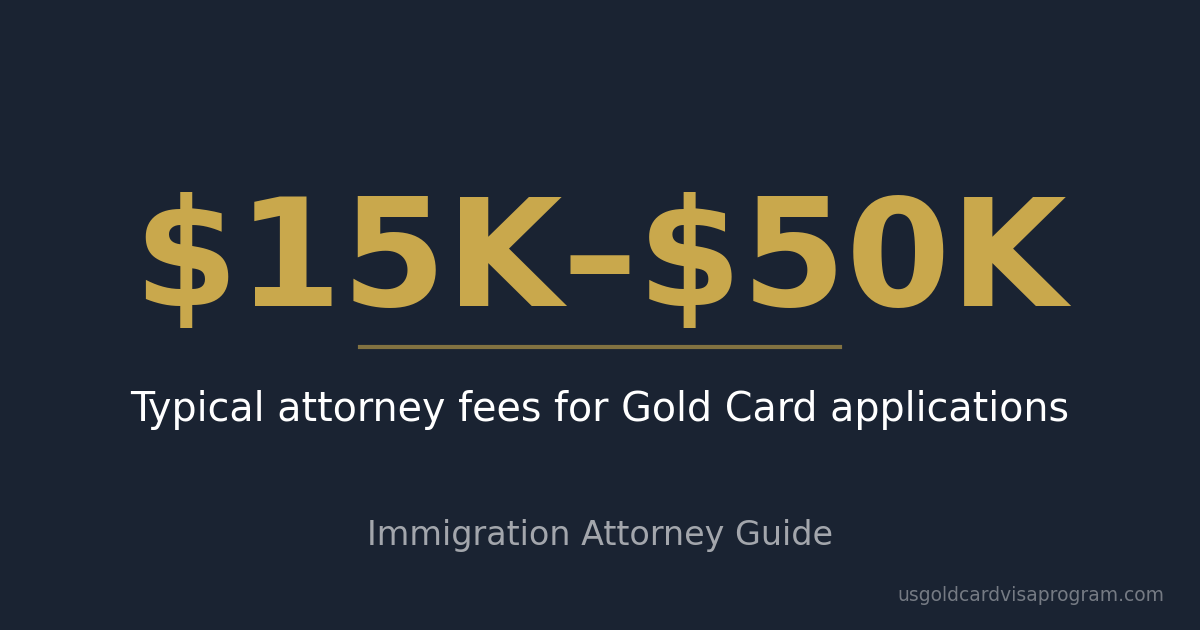
While it would be inappropriate to quote specific dollar amounts that may change as the Gold Card program takes shape, you can use existing EB-5 attorney fees as a general benchmark. Competent EB-5 attorneys typically charge fees that reflect the substantial complexity of these cases, and Gold Card fees will likely be at the higher end of that range or above, given the larger investment amounts and the additional complexity of a new program. Obtain proposals from at least three qualified attorneys to establish a reasonable range for comparison. Remember that the lowest fee is not necessarily the best value, and that the cost of inadequate representation far exceeds any savings on legal fees when millions of dollars are at stake.
The Full Professional Team You Need
Your immigration attorney is the cornerstone of your Gold Card application team, but they should not be the only professional advising you. A successful Gold Card application requires coordinated input from multiple disciplines, and the best outcomes result from a team-based approach where each professional understands their role and communicates effectively with the others.
Immigration Attorney
Your attorney leads the application strategy, prepares and files all immigration documents, interfaces with government agencies, and coordinates the overall process. They serve as the quarterback of your professional team, ensuring that advice from other professionals is incorporated into a cohesive application strategy. Critically, your attorney should be proactive about identifying issues that require input from other team members rather than attempting to handle everything themselves.
Certified Public Accountant or International Tax Advisor
A CPA or tax advisor with international expertise is essential for addressing the tax implications of becoming a US permanent resident. They will advise on pre-immigration tax planning, help structure the investment to minimize adverse tax consequences, ensure compliance with reporting obligations such as FBAR and FATCA, and coordinate with your home-country tax advisors to address any treaty implications. Your immigration attorney and your tax advisor must communicate directly and regularly, as decisions made in one domain frequently affect the other.
Wealth Advisor or Financial Planner
A wealth advisor with experience serving international clients and immigrant investors can help you evaluate how the Gold Card investment fits within your broader financial portfolio, assess liquidity considerations, plan for currency exchange timing, and structure your assets in a way that supports both your investment objectives and your immigration application. They can also provide valuable perspective on the long-term financial implications of US residency, including estate planning considerations that may affect how you hold assets.
Banking Relationship Manager
The movement of $1 million or more per applicant across international borders involves significant banking compliance requirements, including anti-money-laundering checks, know-your-customer documentation, and wire transfer protocols. A banking relationship manager who understands both the source country’s regulations and US banking compliance requirements can facilitate smooth fund transfers and help generate the documentary evidence that your immigration attorney will need to demonstrate lawful source of funds. Establishing this banking relationship early, before the application process begins, can prevent delays and complications later.
How the Team Works Together
The most effective approach is for your immigration attorney to serve as the central coordinator, convening the team at key decision points and ensuring that advice from different professionals is consistent and mutually supportive. Establish clear communication protocols at the outset, including who communicates with whom, how information is shared, and how conflicts between different professional recommendations are resolved. A well-coordinated team can identify and address potential issues before they become problems, resulting in a stronger application and a smoother process overall.
When to Start Your Attorney Search
Timing is a critical and frequently underestimated factor in the Gold Card Visa process. Now that the Gold Card program is live at trumpcard.gov, there are compelling reasons to begin your attorney search immediately if you have not already done so.
The Advantage of Early Preparation
Now that the Gold Card program is accepting applications, demand for qualified immigration attorneys with relevant experience is surging. Attorneys who are recognized as leaders in investor immigration will quickly reach capacity, and applicants who have not already established a relationship may find themselves on waiting lists or forced to retain less experienced counsel. By beginning your search now, you can take the time to evaluate multiple attorneys thoroughly, conduct proper due diligence, and secure a commitment from your preferred counsel before demand peaks further.
Pre-Application Preparation Steps
A qualified attorney can help you with several valuable preparation steps. These include conducting a preliminary assessment of your eligibility based on currently available program information, beginning the process of organizing and documenting your source of funds, identifying potential issues in your financial history that might require explanation or additional documentation, coordinating with your tax and financial advisors to develop a pre-immigration tax plan, and assembling the broader professional team that will support your application. These preparation steps can significantly reduce the time required to file, positioning you ahead of the competition.
Staying Informed During the Regulatory Process
A good attorney will monitor regulatory developments and keep you informed of any changes that might affect your application strategy. They can participate in public comment periods, attend stakeholder engagement sessions, and provide you with informed analysis of how the program is taking shape. This ongoing intelligence is valuable in its own right and ensures that your preparation remains aligned with the most current information available. Program details may continue to evolve, and having an attorney already engaged means you can adapt your strategy quickly rather than scrambling to respond to new requirements.
Key Takeaways
- The stakes demand specialized counsel. A non-refundable gift payment of $1 million per person (plus $15,000 processing fee) requires an attorney with specific expertise in investor immigration, not a generalist who handles immigration matters occasionally. The consequences of inadequate representation are too severe to accept anything less than the best available counsel.
- Look for demonstrated investor visa experience. AILA membership, EB-5 track record, cross-border tax awareness, and relevant certifications are the baseline qualifications you should require. Verify claims independently whenever possible.
- Watch for red flags. Guaranteed approval promises, unusually low fees, lack of investor visa experience, and pressure tactics are all warning signs that should eliminate an attorney from consideration, regardless of how impressive their marketing materials may appear.
- Ask thorough questions during consultations. Your initial consultation is a structured interview, not a sales presentation. Use the questions outlined in this guide to evaluate competence, communication style, and cultural fit.
- Understand fee structures before committing. Get clear written proposals from at least three qualified attorneys, understand exactly what is included, and evaluate value rather than simply selecting the lowest price.
- Build a complete professional team. Your attorney should coordinate with your CPA, wealth advisor, and banking relationship manager to ensure a cohesive strategy that addresses immigration, tax, financial, and compliance considerations simultaneously.
- Start your search early. The best attorneys are reaching capacity quickly now that the Gold Card program is live. Beginning your search and preparation immediately positions you for a stronger application filed sooner.
- Always consult qualified professionals. This guide provides a framework for your attorney search, but every individual’s circumstances are unique. Consult qualified immigration attorneys, tax advisors, and financial professionals who can evaluate your specific situation and provide tailored guidance.
Related: Gold Card vs Portugal Golden Visa Comparison
📋 Free Download: The Complete Gold Card Visa Guide 2026
Get our comprehensive PDF guide — Gold Card vs EB-5, qualification checklist, attorney selection guide, and more.
No spam. Unsubscribe anytime.
Related: Trump Gold Card Lawsuit: Legal Challenges and Risks for Investors [2026 Updates]
Stay Updated on Gold Card Visa Changes
Get real-time updates on policy changes, processing times, and legal developments. Free newsletter, no spam.
About the Editorial Team
This article was researched and written by the editorial team at usgoldcardvisaprogram.com. We specialize in US immigration investment programs and provide well-researched, regularly updated content. Our information is sourced from official government publications, immigration law firms, and verified policy documents. This content does not constitute legal or financial advice.