What is the Trump Gold Card Visa? Complete Guide 2026
The Trump Gold Card Visa represents one of the most significant changes to U.S. immigration policy in recent years. If you’re exploring pathways to American residency through contribution, this program deserves your attention. This comprehensive guide breaks down everything you need to know about the Trump Gold Card visa, from its announcement to its current status.
Latest Updates: Gold Card Visa News — March 2026 — Lawsuit status, visa bulletin, program developments
What Is the Trump Gold Card Visa?
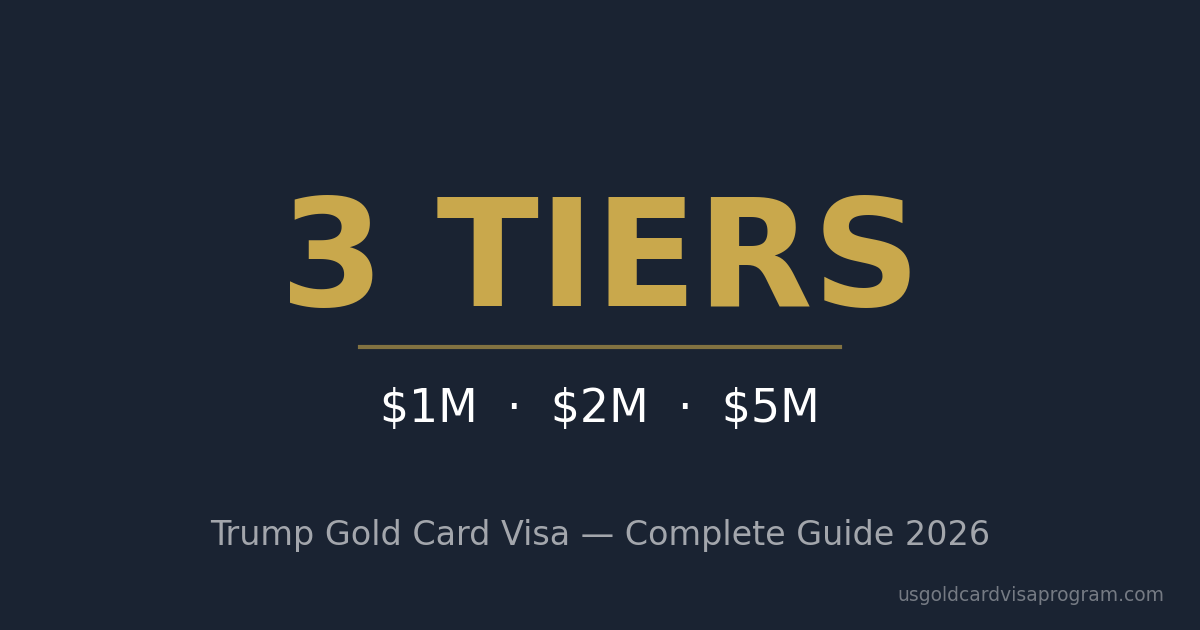
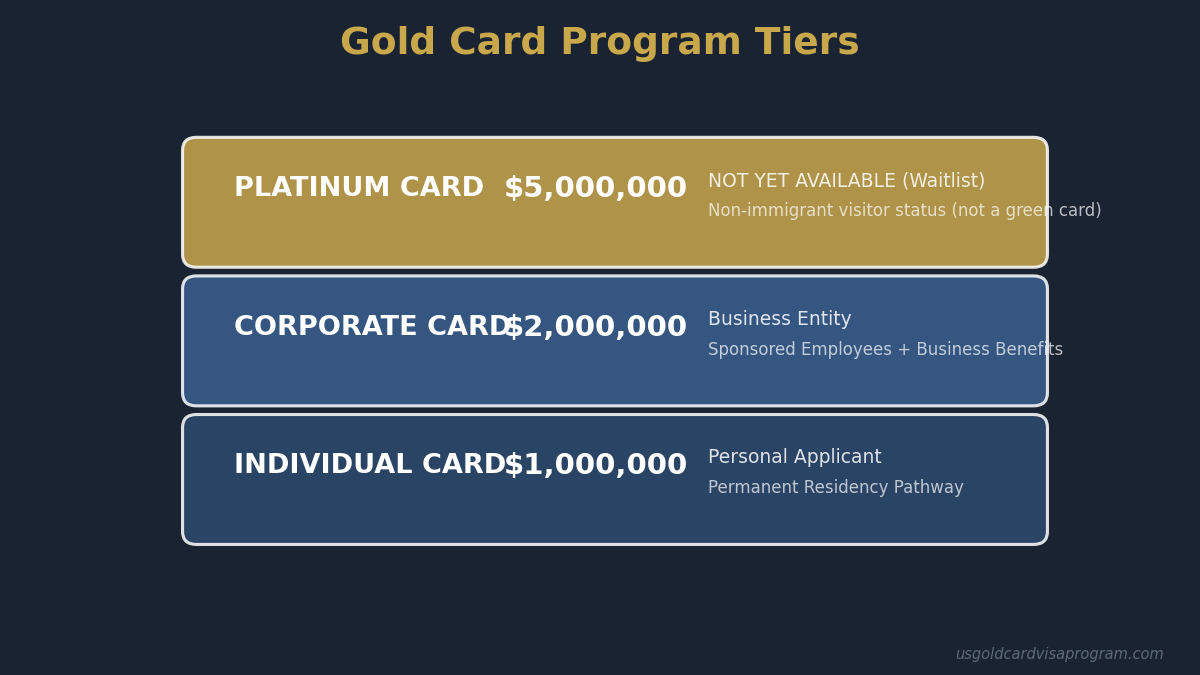
The Trump Gold Card Visa is a premium immigration pathway that offers foreign nationals a route to U.S. permanent residency (a green card) through tiered contribution levels: $1 million (Gold individual), $2 million (Corporate), and $5 million (Platinum, waitlist only). The program operates under existing EB-1A and EB-2 NIW visa categories (see also our Gold Card vs O-1 visa comparison), with applications filed using Form I-140G. Launched by President Donald Trump in December 2025 at trumpcard.gov, this program was positioned as a replacement for the existing EB-5 Immigrant Investor Program, which requires a minimum investment of $800,000 in targeted employment areas.
The Gold Card program targets high-net-worth individuals seeking expedited processing and a more streamlined path to residency. Learn more about who qualifies for the Gold Card. With the $1 million Gold individual tier, the program is accessible to a broader range of applicants, while the higher tiers offer premium options. Unlike traditional investor visas, the Gold Card is designed to appeal to individuals seeking a faster, more direct route to American citizenship.
The program generated significant media attention and controversy almost immediately after its announcement, with questions raised about its legality, implementation timeline, and how it would interact with existing immigration pathways.
How the Trump Gold Card Visa Works
The mechanics of the Gold Card program are relatively straightforward, though the implementation details have evolved since the initial announcement.
Basic Process:
The application process begins with the applicant selecting a tier and applying through trumpcard.gov. See our step-by-step application guide for the full process. Applicants undergo vetting first; upon approval, they make a non-refundable gift to the U.S. Department of Commerce ($1M Gold individual, $2M Corporate, or $5M Platinum). A $15,375 processing fee applies per person. Each family member (spouse, children) must submit their own application with their own $1M contribution and $15,375 fee. Unlike the EB-5 program, which requires investment in specific job-creating projects, the Gold Card payment is a non-refundable contribution, not an investment.
After submitting the application and required documentation, applicants undergo standard immigration background checks and medical examinations. Those approved receive conditional permanent residency, with the condition being completion of the program requirements.
The administration promised faster processing times than the traditional EB-5 pathway, which can take several years due to high demand and limited visa quotas. However, exact processing timelines were never firmly established, and the program’s limited rollout has made it difficult to verify these claims.
Free Gold Card Visa Guide
Get our Gold Card guide with cost breakdowns, timelines, and attorney tips. Delivered instantly to your inbox.
No spam. Unsubscribe anytime.
Cost and Contribution Requirements
The Trump Gold Card visa offers tiered contribution levels: $1 million (Gold individual), $2 million (Corporate), and $5 million (Platinum, waitlist only—not yet available). For a detailed Gold Card visa cost breakdown, see our dedicated guide. In addition, a $15,375 processing fee applies per person. The $1 million entry tier makes the program accessible to a broader range of applicants, while the higher tiers position the United States competitively with premium programs in other countries.
Cost Comparison:
| Program | Minimum Contribution | Additional Fees |
| Trump Gold Card (Individual) | $1,000,000 (non-refundable gift) | $15,375 processing fee per person, legal fees |
| EB-5 Standard | $1,800,000 | Regional center fees, processing costs |
| EB-5 TEA | $800,000 | Regional center fees, processing costs |
| Portugal Golden Visa | ~$350,000 | Processing fees |
| Spain Golden Visa | ~$500,000 | Processing fees |
The Gold Card contribution is a non-refundable gift to the U.S. Department of Commerce—it is not an investment in a business. Unlike EB-5, which requires investment in a job-creating enterprise (10 full-time positions), the Gold Card payment goes directly to the federal government and is not returned.
Beyond the contribution itself, applicants should budget for legal representation, immigration filing fees, medical examination costs, and potential travel expenses for interview requirements. Review the source of funds documentation requirements before you begin.
Benefits and Privileges
Gold Card holders receive a pathway to full U.S. permanent residency, with all the rights and privileges that entails.
Primary Benefits:
- Permanent Residency Pathway: Holders receive green cards allowing them to live and work indefinitely in the United States
- No Sponsorship Required: Unlike family-based or employment-based immigration, no U.S. sponsor is necessary
- Access to Education: Permanent residents can access U.S. public education and qualify for in-state tuition at many universities
- Work Authorization: Holders can work for any employer or start their own business
- Path to Citizenship: After maintaining residency for the required period (typically 5 years), holders can apply for naturalization
- Has Anyone Actually Received a Gold Card? [2026 Status]
- Corporate Gold Card: The $2M Employer-Sponsored Pathway
Additional Advantages:
The administration has indicated Gold Card holders may receive preferential treatment in certain areas. These potential advantages include faster federal contractor approvals, priority handling for certain business permits, and potential tax advantages—though specific details continue to be formalized. Understand the full tax implications for Gold Card holders.
It’s important to note that permanent residents maintain their home country citizenship and can potentially lose their green card if they abandon U.S. residency, so consulting with an immigration attorney about maintenance requirements is essential. Our immigration attorney guide can help you find the right legal counsel.
How It Compares to Other Visa Programs
Understanding how the Gold Card fits into the broader landscape of investor-based immigration helps contextualize its value proposition.
Trump Gold Card vs. EB-5 Immigrant Investor Program
For an in-depth analysis, read our full Gold Card vs EB-5 comparison.
The Gold Card was explicitly designed as a premium alternative to EB-5. While both programs offer pathways to permanent residency through investment, key differences include:
- Contribution Amount: Gold Card individual tier requires a $1 million non-refundable gift (Corporate $2M, Platinum $5M waitlist only) versus EB-5’s $800,000-$1,800,000 investment
- Processing Speed: Gold Card offers expedited processing compared to EB-5
- Quota Limitations: EB-5 faces significant visa queue backlogs; Gold Card is designed to bypass these
- Job Creation Requirements: EB-5 mandates 10 jobs created; Gold Card has more flexible requirements
Gold Card vs. Other Investment Immigration Programs
Compared to golden visa programs in Europe, the Gold Card offers something those programs typically don’t: a direct pathway to U.S. citizenship. Read our full Gold Card vs Portugal Golden Visa comparison. European golden visas generally grant residence permits, not citizenship, and often come with physical presence requirements that U.S. permanent residency does not impose.
Executive Order Background
The Gold Card program originated from an executive order signed by President Trump in late 2025. The executive order directed federal agencies to establish a new immigrant investor program with the stated goals of attracting “the world’s most talented entrepreneurs and job creators.”
Key provisions of the executive order included:
- Directing USCIS to establish new application procedures
- Instructing the Department of State to process Gold Card applications
- Calling for expedited processing compared to existing immigration pathways
- Establishing tiered contribution thresholds: $1 million (Gold individual), $2 million (Corporate), and $5 million (Platinum, waitlist only)
The order explicitly referenced replacing or restructuring the EB-5 program, though the legal authority to completely replace an existing congressionally-authorized program through executive action was questioned by legal experts from the beginning.
Current Status and Legal Challenges
The Trump Gold Card program has been live since December 2025. While the program has faced legal questions, applications are actively being accepted at trumpcard.gov.
Implementation Challenges:
The program launched in December 2025 and is accepting applications through trumpcard.gov. The application uses Form I-140G (not the EB-5 Form I-526) and falls under existing EB-1A or EB-2 NIW visa categories. While early rollout presented some logistical challenges, the program is now operational.
Legal Questions:
Immigration attorneys raised concerns about the program’s legality from the start. Read about the legal challenges facing the Gold Card program. The EB-5 program was established by Congress, and questions arose about whether an executive order could effectively replace or supersede an existing congressionally-authorized pathway. Some legal scholars argued that any new investor program would need congressional approval to allocate visa numbers and establish the program’s legal foundation.
Current Standing:
As of February 2026, the Gold Card program is live and accepting applications for the Gold individual and Corporate tiers. Prospective applicants should be aware that:
- Applications are accepted at trumpcard.gov
- The Platinum tier ($5M) is pending Congressional approval
- Legal challenges remain ongoing and could affect certain aspects of the program
- Processing timelines are being established as the program scales
Last Updated: February 2026. Program details may change. This article is for informational purposes only.
Frequently Asked Questions
Is the Trump Gold Card visa currently available for applications?
Yes. The Gold Card program launched in December 2025 and is accepting applications at trumpcard.gov. The Gold individual ($1M) and Corporate ($2M) tiers are currently available. The Platinum tier ($5M) requires Congressional approval and is not yet available. Consult with an immigration attorney for the most current program details.
How much does the Trump Gold Card visa cost?
The program offers tiered pricing: $1 million (Gold individual), $2 million (Corporate), and $5 million (Platinum, pending Congressional approval). In addition, a $15,375 processing fee applies per person. These amounts do not include legal fees, medical examination costs, or other associated expenses. Each family member must apply separately with their own contribution.
What is the difference between the Gold Card and EB-5?
The Gold Card individual tier requires a $1 million non-refundable gift to the Department of Commerce (Corporate tier: $2M; Platinum tier: $5M, waitlist only), compared to EB-5’s $800,000-$1,800,000 investment in a job-creating enterprise. The Gold Card uses Form I-140G under EB-1A or EB-2 NIW visa categories, while EB-5 uses Form I-526. The Gold Card program is live and accepting applications.
Does the Gold Card lead to U.S. citizenship?
Yes, the Gold Card is designed as a pathway to permanent residency (green card), which can eventually lead to U.S. citizenship through the naturalization process, typically after five years of permanent residency.
Can I include my family members on the application?
Family members are not automatically included. Each family member (spouse and children) must submit their own separate Gold Card application, with their own $1 million contribution and $15,375 processing fee. This is a significant difference from the EB-5 program, where derivative family members can be included on a single petition.
Is the Gold Card contribution refundable?
No. The Gold Card payment is a non-refundable gift to the U.S. Department of Commerce. Unlike the EB-5 program, where investments can potentially be returned after the conditional residency period, the Gold Card contribution is not recoverable. The payment is made after vetting is completed, so applicants know their approval status before committing funds. Consult with an immigration attorney for specific details about your tier.
Should I wait for the Gold Card or apply for EB-5 instead?
This depends on your specific circumstances, timeline, and financial capacity. The EB-5 program is an established, legally-tested pathway with clear requirements and processing times. The Gold Card is now live and offers expedited processing with tiered contribution levels starting at $1 million (individual tier). An experienced immigration attorney can help you evaluate your options based on your individual situation.
Conclusion
The Trump Gold Card Visa represents an ambitious attempt to create a premium immigration pathway for ultra-high-net-worth investors. The program is live since December 2025, offering tiered contribution levels starting at $1 million for individuals. While legal questions remain, applications are actively being processed through trumpcard.gov.
For those with the financial capacity to pursue this pathway, several factors merit consideration:
- Program Status: The Gold Card is live at trumpcard.gov with Gold individual and Corporate tiers accepting applications
- Legal Uncertainty: Questions about the program’s legal foundation persist
- Alternative Options: The EB-5 program remains a viable, established alternative
- Professional Guidance: Given the complexity, working with an experienced immigration attorney is essential
Next Steps:
If you’re considering the Trump Gold Card visa or exploring other immigration pathways, the most important action you can take is consulting with a qualified immigration attorney. If you hold cryptocurrency, review our guide on Gold Card requirements for crypto entrepreneurs. An experienced legal professional can assess your individual circumstances, explain current program status, and help you develop an immigration strategy that aligns with your goals.
The U.S. immigration landscape continues to evolve, and staying informed about program developments while securing professional guidance will position you best for a successful outcome.
Free Download: The Complete Gold Card Visa Guide 2026
Get our comprehensive PDF guide — Gold Card vs EB-5, qualification checklist, attorney selection guide, and more.
Have questions? See our 25 most common Gold Card Visa questions answered.
Stay Updated on Gold Card Visa Changes
Get real-time updates on policy changes, processing times, and legal developments. Free newsletter, no spam.
This article is for informational purposes only and does not constitute legal or immigration advice. Consult a qualified immigration attorney before making any decisions.
Related Guides
About the Editorial Team
This article was researched and written by the editorial team at usgoldcardvisaprogram.com. We specialize in US immigration investment programs and provide well-researched, regularly updated content. Our information is sourced from official government publications, immigration law firms, and verified policy documents. This content does not constitute legal or financial advice.
Need Help Finding the Right Immigration Attorney?
The Gold Card requires specialized legal expertise. We've put together a guide on what to look for.
Find a Gold Card Attorney →